Panel | Thursday, October 15, 2026 · 1 PM
Teaching Effectiveness Under the 2026 AACSB Global Standards: What’s Changing?
Fairfield by Marriott Inn & Suites Austin Downtown, Rainey Street District · ISM Teaching & Learning Conference, October 14–16, 2026
What’s changing
The 2026 AACSB Global Standards introduce a significant shift. Teaching effectiveness is now recognized as a faculty qualification criterion under Standard 3, not just a school-wide assessment activity under Standard 7. This panel examines what that change means in practice, and how Standard 3 and Standard 7 are designed to work together, with Standard 7 itself carrying forward unchanged.
Panelists walk through the substance of the Standard 3.2 revisions, including clarified expectations that all four faculty categories — Scholarly Academic, Practice Academic, Scholarly Practitioner, and Instructional Practitioner — demonstrate disciplinary currency and a commitment to high-quality teaching, and the consequences for faculty who do not meet a school’s defined criteria.
The discussion covers representative criteria schools are adopting, including peer review, student feedback, teaching portfolios, course redesign, teaching development, and documented improvement.
Because AACSB requires schools to define their own teaching-effectiveness criteria, faculty governance is an important part of this work. Faculty need to be involved in revising the policies and criteria that will ultimately be used to evaluate them. The panel offers practical guidance for institutions beginning this work now, ahead of formal evaluation.
The timeline
| Period | What happens |
|---|---|
| 2026–27 | Voluntary piloting |
| 2027–29 | Schools define and refine their own criteria |
| 2029–30 | Full evaluation begins |
Who should attend
Deans, associate deans, department chairs, accreditation and assessment leads, faculty governance chairs, and any faculty member whose qualification status will be evaluated under the revised standards.
Colleagues at programs accredited by ACBSP or IACBE will find the mechanisms familiar even though the standard itself does not apply to them.
The panel
Three perspectives on the same standard: the reviewer who applies it, the associate dean building a framework against it now, and the dean who has led maintenance of accreditation.
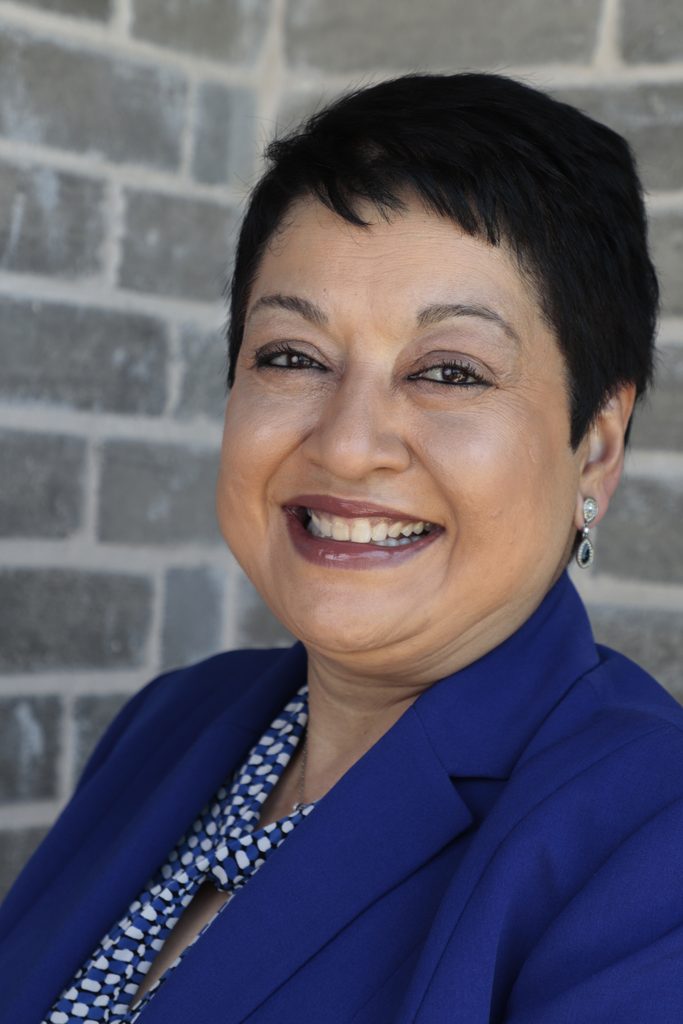
Dr. Rama Yelkur
Executive Dean, Merrilee Alexander Kick College of Business & Entrepreneurship, Texas Woman’s University
Dr. Yelkur is an active AACSB peer reviewer and Initial Accreditation Committee member, evaluating business schools worldwide and mentoring schools navigating the accreditation process. She currently serves as Peer Review Team chair for schools being reviewed under the AACSB Global Accreditation Standards. She also serves on the Beta Gamma Sigma Board of Governors, where she chairs the AACSB Partnership Committee, and is past President of the International Society of Marketing and past chair of AACSB’s Women Administrators in Management Education.
She is internationally recognized for more than 25 years of research on Super Bowl advertising effectiveness, work regularly cited in The Wall Street Journal, The New York Times, Forbes, and Fortune. She is a credentialed board director with NACD Directorship Certification and serves on the board of KERA of North Texas.
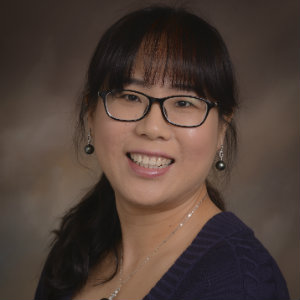
Dr. Zhen Li
Associate Dean for Accreditation and Associate Professor, Merrilee Alexander Kick College of Business & Entrepreneurship, Texas Woman’s University
Dr. Li plays a leadership role in AACSB accreditation and continuous improvement, with a focus on teaching effectiveness, societal impact, faculty qualifications and development, assurance of learning, and strategic initiatives.
She is currently leading efforts to strengthen her college’s teaching effectiveness framework through multiple measures of teaching quality and evidence-based practices that support faculty development and enhance student learning.
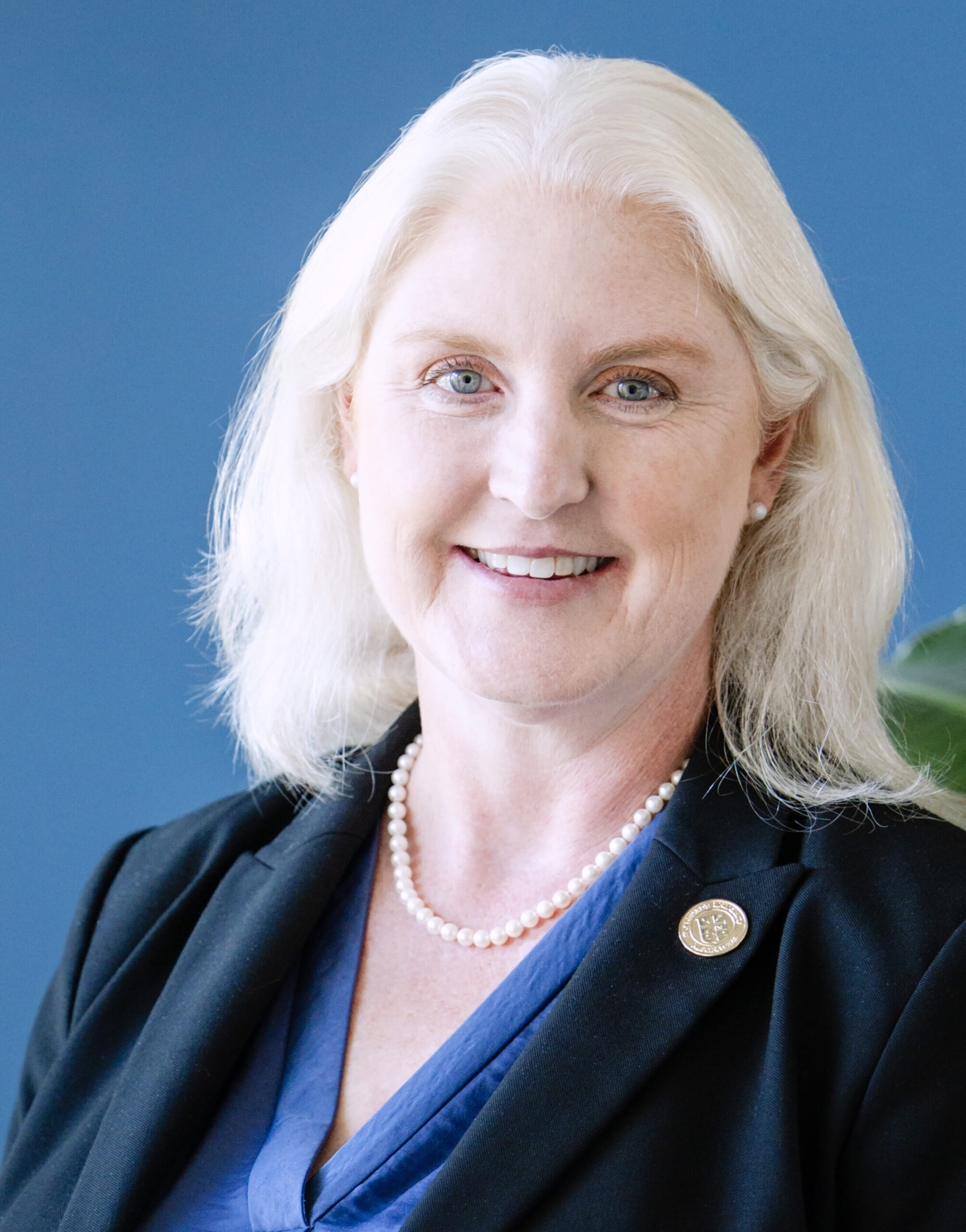
Alexis B. Stokes
Dean, The Bill Munday School of Business, St. Edward’s University, Austin
Dean Stokes leads the AACSB-accredited Bill Munday School of Business, where all ten majors and four online graduate programs are built on five pillars of the Austin ecosystem: entrepreneurial thinking, social enterprise, innovation management, global collaboration, and analytics.
Before joining St. Edward’s in 2023, she was Associate Dean of Faculty and Research at Texas State University’s McCoy College of Business, where she led AACSB maintenance of accreditation efforts and served as AACSB Accreditation Coordinator. She has taught more than 8,000 students and has published in securities law, corporate governance, and international dispute resolution.
She earned her B.A. in Economics, Political Science, and Managerial Studies, cum laude, from Rice University, and her J.D. from Harvard Law School, where she was President and Editor-in-Chief of the Harvard Journal on Legislation. She is a certified mediator, licensed to practice law in Texas, and serves on the Board of Directors of the Southwestern Business Deans Association.
Where you’ll be
The conference hotel sits in Austin’s Rainey Street District, on the southeast edge of downtown. It is a walkable neighborhood of converted bungalows turned restaurants and bars, with the Lady Bird Lake hike-and-bike trail a block away and the Mexican American Cultural Center next door.
Because ISM runs no concurrent programming, evenings are free. Rainey Street is a good place to spend them.
Austin-Bergstrom International Airport is about fifteen minutes away by car.
Fairfield by Marriott Inn & Suites Austin Downtown
76 East Avenue, Austin, TX 78701
(512) 653-1600
View on Google Maps
Open in Google Maps
Map data © OpenStreetMap contributors
Join us in Austin
October 14–16, 2026. Twelve sessions across two and a half days, with no concurrent programming, so you never have to choose between sessions.